
Flowmaster Mufflers: How to Choose the Right One

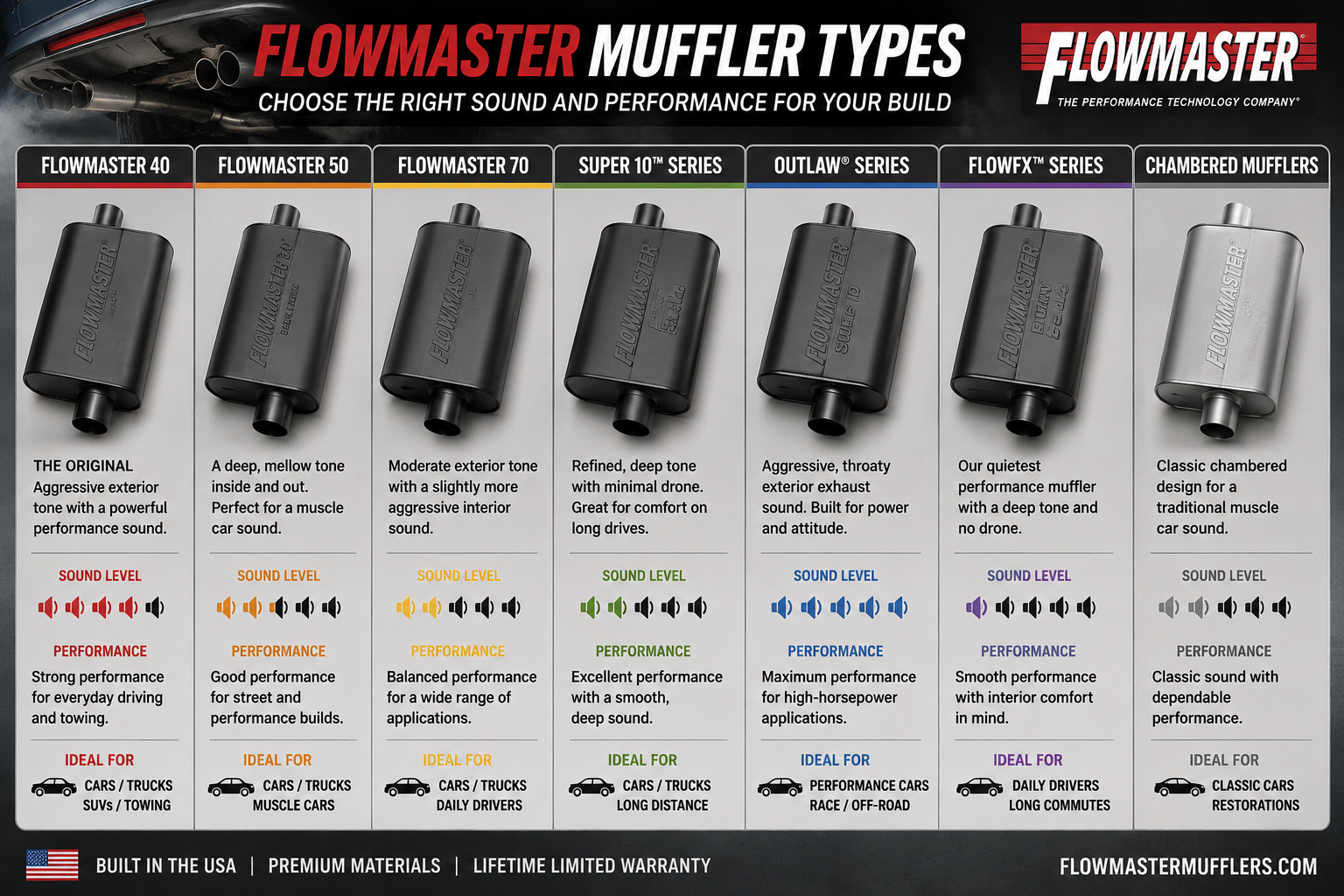
A Flowmaster muffler can change much more than the volume coming from your tailpipes. Internal design, case size, flow characteristics, and the rest of the exhaust system all influence how the vehicle sounds and behaves. Choosing the right one starts with understanding those differences and matching them to your engine, driving habits, and build.
Start With the Main Flowmaster Muffler Types
Flowmaster offers several muffler designs because no single internal layout suits every vehicle or driver. Some use the chambered construction that helped establish the Flowmaster name, while others rely on straight-through or laminar-flow designs. Understanding those differences gives you a better starting point for choosing a muffler.
Chambered Mufflers Deliver the Classic Flowmaster Character
Chambered mufflers are closely associated with the traditional Flowmaster sound. Instead of relying on a perforated tube surrounded by packing material, these mufflers use internal chambers and deflectors to control exhaust pulses and sound energy.
Flowmaster's 40 Series is a well-known example. The current Original 40 Series uses the company's two-chamber design and is intended to produce an aggressive exterior and interior sound. Flowmaster describes it as its original two-chamber muffler for enthusiasts who want that recognizable performance tone.
That makes chambered designs appealing for muscle cars, hot rods, and classic trucks where an aggressive exhaust note is part of the build's character. However, the stronger interior sound associated with an aggressive muffler also deserves consideration if you spend significant time behind the wheel.
For enthusiasts looking for the traditional Flowmaster character, chambered construction remains one of the most recognizable options in the lineup.
Straight-Through Mufflers Take a Different Approach
Straight-through designs provide another option within the current Flowmaster muffler series. Instead of directing exhaust through multiple chambers, they provide a more direct path through the muffler.
Flowmaster's FlowFX line uses a straight-through internal design with a perforated core and sound-absorbing material. The company positions FlowFX mufflers as performance-oriented products with a moderately aggressive sound rather than the traditional chambered Flowmaster layout.
This distinction matters when you're comparing Flowmaster muffler types. A straight-through and a chambered muffler can both belong on a performance build, but they control exhaust flow and sound through different internal designs.
The surrounding exhaust and engine combination still influence the result, so the same FlowFX muffler may not sound identical from one vehicle to another.
Laminar-Flow Designs Balance Flow, Sound, and Packaging
Flowmaster also uses laminar-flow technology in mufflers such as the Super HP-2. These designs route exhaust through internal passages surrounded by sound-absorbing material rather than using the traditional chamber arrangement. Flowmaster describes the Super HP-2 as a compact muffler with a moderate tone and lower exterior case temperatures.
The compact design can be useful when a modified classic has limited room for exhaust components. Available space, heat, and the sound you want can all make this type of internal layout worth considering.
Performance Online currently carries Super HP-2 mufflers alongside 40 Series options, making these Flowmaster muffler differences relevant to the classic cars and trucks POL serves.
None of these designs is automatically better. Chambered mufflers emphasize traditional Flowmaster character, straight-through designs use a more direct internal path, and laminar-flow designs offer another option where sound, heat, and compact packaging matter.
Compare Mufflers by More Than Sound Level
A useful Flowmaster muffler comparison needs to go further than quiet, moderate, and loud. Those descriptions help narrow the field, but they don't tell you whether a muffler fits under the vehicle, connects to your existing tubing, or suits the way you actually drive.
Match Sound Character to How You Use the Vehicle
Sound is personal. Some enthusiasts want an aggressive idle and a strong exhaust note every time they get into the throttle. Others want to hear the engine without making a long highway trip tiring.
Start with how you use the vehicle.
A weekend muscle car that spends most of its time on local roads can tolerate a different sound level than a cruiser that regularly sees two-hour highway runs. A classic truck used for longer trips may also benefit from a more restrained cabin experience even if you still want a noticeable exterior tone.
Engine combination changes the result as well. Displacement, compression, camshaft, headers, exhaust diameter, and rpm all influence the exhaust pulses and sound the complete system produces. That is why a sound clip can help establish general character, but it cannot guarantee how the same muffler will sound on your vehicle.
Treat volume as one part of the decision. Tone and cabin resonance matter just as much once you're behind the wheel.
Check Case Size, Pipe Diameter, and Configuration
A muffler must physically fit the exhaust system. Before choosing one, check the case length and width, overall length, connection diameter, and inlet and outlet positions.
Flowmaster offers mufflers in several configurations, including center and offset inlet or outlet arrangements. Which one you need depends on how the pipes approach and leave the muffler. Forcing the wrong configuration into the available space can add unnecessary bends and complicate an otherwise straightforward system.
Connection diameter deserves the same attention. The muffler inlet and outlet need to match the tubing used in the system or the dimensions planned for a new exhaust.
Ground clearance matters most on lowered cars and trucks. Measure the available space rather than assuming a familiar muffler will fit because you've seen one installed on the same vehicle model. Suspension changes, transmissions, crossmembers, and previous exhaust work can leave two apparently similar classics with very different space underneath.
Think About Construction and Long-Term Use
Material can matter as much as internal design when you plan to keep the exhaust for years. Flowmaster uses different materials across its muffler catalog, including aluminized steel and stainless steel depending on the series and application.
How much that matters depends partly on the vehicle's environment. A fair-weather classic that stays in a dry garage faces different conditions from a truck that regularly sees rain and wet roads.
Weld quality, case construction, hangers, clamps, and the surrounding exhaust installation also affect durability. Even a well-built muffler can suffer if the exhaust hangs poorly and repeatedly loads the case or connections as the vehicle moves.
Think about heat too. Exhaust components may sit near the floor, fuel system, wiring, brake lines, or other parts that don't handle excessive heat well. Flowmaster specifically highlights reduced exterior case temperatures as one characteristic of its laminar-flow technology.
A good muffler needs to handle regular heat, vibration, and movement for years, not simply fit correctly on installation day.
Choose a Flowmaster Muffler Around Your Build
No single Flowmaster muffler is best for every classic car or truck. Once you understand the main differences, apply those criteria to the exhaust and vehicle you actually have.
Match the Muffler to the Engine and Exhaust
Start by looking at the system the muffler will join. A mild small-block cruiser and a higher-output engine may have different exhaust requirements, but the muffler also needs to work with the system supporting that engine.
Header collector size, exhaust diameter, single or dual-layout, crossover design, and tailpipe routing define the environment in which the muffler operates. Those details help determine the connection size, configuration, and muffler design that fit the system.
That is also why changing mufflers alone doesn't always produce the result someone expects. A different muffler can change sound and other characteristics, but it cannot correct every restriction, routing problem, or mismatch elsewhere in the exhaust.
When we look at muffler selection, we consider what the muffler connects to and what the surrounding exhaust already requires rather than asking one component to solve a system-wide problem.
Choose for the Driving You Actually Do
Once you've narrowed the options by design and fitment, think about where the engine spends its time while you're actually driving. This matters most if the vehicle sees regular highway use.
Transmission gearing and rear axle ratio influence engine rpm at cruising speed. If the engine spends long periods in an rpm range where cabin resonance becomes noticeable, a muffler that seemed acceptable during a short drive can become tiring after an hour on the highway.
A local street car may place less emphasis on steady-speed cabin comfort, while a cruiser built for longer trips may make it a major part of the decision. More aggressive street or track-oriented builds can shift those priorities again.
Choose a muffler that delivers the character you want in the rpm range and driving conditions you actually use the vehicle in.
Verify the Details Before You Order
Once you've narrowed down the Flowmaster muffler types that suit the build, verify the specifications before ordering. Confirm pipe diameter, inlet and outlet orientation, case dimensions, overall length, construction material, and the room available beneath the chassis.
Make sure those measurements work with the surrounding exhaust and chassis. The muffler needs enough room to avoid contact as the drivetrain and suspension move, with suitable clearance from fuel and brake lines, wiring, and other heat-sensitive areas.
If you're building a custom exhaust, deciding these details before fabrication gives you more freedom to position the mufflers where they work best. If you're replacing mufflers in an existing system, accurate measurements matter even more because much of the routing is already set.
The right Flowmaster muffler is the one whose sound, dimensions, connections, construction, and driving characteristics fit your vehicle. Matching those details to your engine, exhaust, and driving style gives you a much better basis for choosing than simply reaching for the loudest or most familiar option.