
Sway Bars
Shop sway bar kits for classic cars and trucks, including front, rear, and matched front-and-rear systems. Find vehicle-specific sway bars, bushings, end links, frame brackets, and related components for Chevy, GMC, Ford, Pontiac, Mopar, and other classic applications.

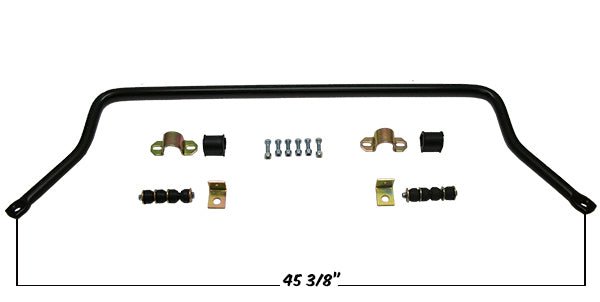


Sway Bars and Roll Control Options
Body roll is created by the difference in movement between the left and right sides of the suspension. A sway bar works across that difference, which means changing the front bar, rear bar, or both can alter how the chassis responds through a corner.
The collection gives builders several ways to approach that balance. Some applications use front-only systems, others have dedicated rear bars, and vehicles such as the Bel Air, Impala, Nova, Camaro, Firebird, GM A-Body, Chevy/GMC trucks, and Ford F-100 can also be equipped with matched front-and-rear packages.
Construction adds another variable. Conventional solid bars make up much of the selection, while the Chevy/GMC truck range also includes a hollow front sway bar design that approaches stiffness and weight differently from a traditional solid bar.
Not every change requires replacing the bar itself. Polyurethane bushings, end links, and frame brackets let you address worn or modified mounting points separately, keeping the connection between the sway bar, suspension, and chassis working as intended.
FAQ
What does a sway bar do?
A sway bar, also called an anti-sway or anti-roll bar, connects the suspension across the vehicle and resists differences in suspension movement from side to side. Its primary role is controlling body roll during cornering while working with the springs, shocks, tires, and other suspension components.
How do I choose the right sway bar kit for my classic car or truck?
Start with the exact year, make, and model. Determine whether you need a front bar, rear bar, or both, then identify the suspension currently installed and its mounting points. Ride height and previous suspension modifications should also be considered before selecting a vehicle-specific kit.
Should I install a front sway bar, rear sway bar, or both?
That depends on the vehicle and the existing suspension. POL offers front-only, rear-only, and matched front-and-rear configurations. A vehicle that already has a suitable front bar may only need a rear system, while another project may call for a coordinated front-and-rear package.
Are front and rear sway bar kits available together?
Yes. POL carries matched front-and-rear packages for applications including Chevy/GMC trucks, Chevy Belair, Impala, Nova, Camaro/Firebird, GM A-Body cars, and Ford F-100 trucks. Exact applications and product configurations vary, so check the individual kit for fitment.
What is the difference between a hollow and solid sway bar?
A solid sway bar uses solid material through its cross-section, while a hollow bar uses tubular construction. Because construction affects both stiffness and weight, two bars with the same outside diameter should not automatically be considered equivalent. POL currently offers a hollow front sway bar system for 1963-87 Chevy/GMC trucks alongside conventional sway bar kits.
Can I replace sway bar bushings and end links without replacing the bar?
Yes, when the existing bar is suitable and the replacement components match its dimensions and mounting arrangement. POL carries polyurethane sway bar frame bushings, truck-style bushings, and polyurethane end-link sets separately from its complete sway bar systems.
What should I check before ordering a sway bar for a modified vehicle?
Confirm the suspension currently installed, front or rear application, sway bar mounting points, control arms, ride height, and available clearance. Lowered suspension, aftermarket control arms, different crossmembers, or other chassis changes can affect which bar, brackets, bushings, and end links are appropriate.