
Steering Gear Boxes
Choose manual and power steering gear boxes matched to classic car and truck applications. Find Saginaw, Delphi, 605, 600, 700 and 800 Series options for Chevy, GMC, Ford, Mopar and other vehicles, including standard and quick-ratio configurations for different steering setups.


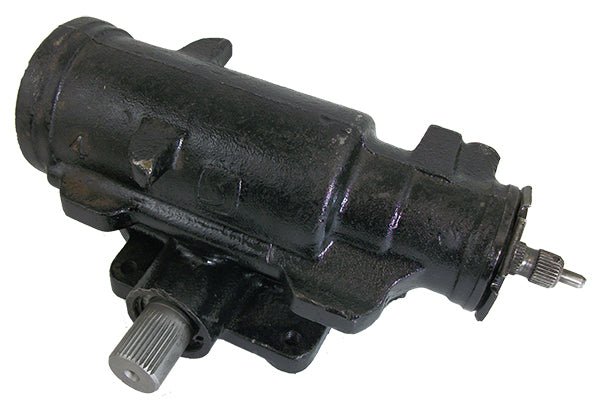


Manual & Power Steering Boxes for Classic Applications
Turn the steering wheel, and the gearbox becomes the point where that rotation is converted into movement at the pitman arm. The distance and speed of that movement depend heavily on the gear inside, which is why steering ratio changes how quickly a classic responds.
This collection approaches that job through several different gearbox families. Saginaw 800, 700 Series, 605 Series, Delphi 600, 525 manual, and Vega boxes each suit different combinations of vehicle, steering effort, and response.
Some applications stay close to a traditional manual arrangement, while others move to hydraulic power steering or a quicker-ratio conversion. That creates separate paths for GM cars, Chevy and GMC trucks, Mustang, Falcon, Mopar, Corvette, and other classics without treating the gearbox as a universal replacement.
The important distinction is what happens through the box itself: steering-wheel input goes in, the internal gear determines the ratio and assist characteristics, and the pitman arm sends that motion into the linkage that actually turns the wheels
FAQ
How do I choose the right steering gear box for my classic car or truck?
Start with the exact year, make, and model, then determine whether the vehicle uses manual or power steering. Check the mounting pattern, steering ratio, input shaft and steering-column connection, pitman arm, hose fittings for power steering, and available clearance. If the steering system has previously been modified, choose according to the components currently installed rather than factory specifications alone.
What is the difference between a manual and power steering gear box?
A manual steering box transfers steering-wheel input mechanically without hydraulic assistance. A power steering box works with a hydraulic pump and hoses to provide steering assistance. POL carries both types, including manual Saginaw 525-style boxes and vehicle-specific power steering boxes for classic cars and trucks.
What is the difference between 600, 605, 700 and 800 Series steering boxes?
These designations refer to different steering gearbox families, and they should not be treated as interchangeable simply because they are all power steering boxes. POL lists 600 and 605 Series options for applications such as the Impala, a 700 Series box for 1967-81 Camaro, and a Saginaw 800 box for 1964-77 GM A-body cars. Match the gearbox series to the vehicle and steering components specified for the installation.
What does quick-ratio steering mean?
Steering ratio describes the relationship between steering-wheel movement and the resulting movement of the steering system. A quicker ratio generally requires less steering-wheel rotation to produce a given steering response. POL offers quick-ratio configurations for selected applications, including its 1962-82 Mopar power steering conversion box.
Are steering gear boxes available for classic Chevy and GMC trucks?
Yes. POL carries a power steering conversion box covering 1947-87 Chevy and GMC truck applications, a manual box for 1960-66 trucks, a blueprinted manual box for 1968-78 C10 models, and a power steering box for 1968-75 four-wheel-drive trucks. Check the individual application because 2WD, 4WD, manual, and power steering configurations require different products.
What other parts might I need when installing a steering gear box?
Depending on the vehicle and conversion, you may need a rag joint or coupler, steering shaft components, pitman arm, power steering hoses, pump, brackets, pulleys, or steering-column modifications. POL carries many of these supporting components separately, so check what is included with the gearbox before ordering additional parts.
What should I check before replacing my existing steering box?
Confirm the vehicle application, manual or power steering type, gearbox series, steering ratio, mounting points, input shaft, pitman-arm connection, steering-column connection, and hose fittings where applicable. Also compare the replacement with any modifications already made to the steering system. POL notes, for example, that some 605 conversions require modification of the stock steering column.