
Vacuum Pumps & Reservoirs
Support your power brake system with brake vacuum pumps and reservoirs designed for classics with limited engine vacuum or smaller brake boosters. Choose from 12-volt electric vacuum pumps and remote reservoir canisters for different power brake setups.


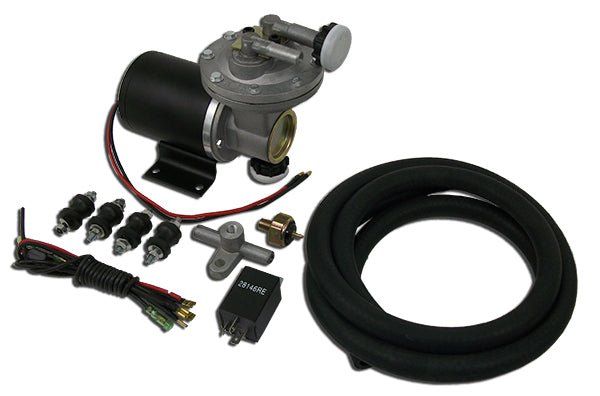

Vacuum Pumps and Reservoirs for Power Brakes
Low vacuum does not always mean the same problem. Sometimes the engine cannot create enough vacuum for the booster; other times the system simply needs more vacuum stored between brake applications.
Electric pumps solve the first issue by generating vacuum independently of the engine. POL’s 12-volt systems are built for low-vacuum brake applications, including a standard pump that cycles automatically between approximately 15 and 22 in-Hg and the compact, oil-less Gast 22D Series.
Reservoirs work differently. They do not create vacuum at all; they add storage capacity for the booster to draw from. That can be especially useful with smaller boosters or during repeated braking where available vacuum may drop more quickly.
This collection therefore separates into two distinct solutions: pumps for creating vacuum and canisters for storing it, with black and chrome reservoir options available for different engine-bay finishes.
FAQ
How do I know if my power brakes need a vacuum pump or reservoir?
Start by checking the amount and consistency of engine vacuum available to the brake booster. If the engine produces too little manifold vacuum, an electric vacuum pump can create additional vacuum for the booster. If sufficient vacuum is available but a small booster needs more stored capacity, a vacuum reservoir may be the more appropriate option. The condition of the booster, vacuum lines, check valve, and complete brake system should also be checked before adding either component.
How much vacuum does a power brake booster need?
Requirements can vary by booster and brake system, so the specifications for the installed booster should guide the decision. POL's 12-volt electric vacuum pumps are designed for low-vacuum power brake applications and switch on when vacuum falls below 15 in-Hg, then switch off after increasing the vacuum level to 22 in-Hg.
When should I choose an electric brake vacuum pump?
An electric vacuum pump can be useful when the engine cannot consistently supply enough manifold vacuum for the power brake booster. This can occur with certain large-camshaft, blower, and other modified engine combinations. The pump creates the vacuum needed by the booster rather than relying entirely on what the engine produces.
What does a brake vacuum reservoir do?
A vacuum reservoir stores vacuum so the power brake booster has an additional supply available when needed. It does not create vacuum like an electric pump. POL's remote reservoir canisters are designed particularly for small-diameter power brake boosters and can provide additional stored vacuum during repeated braking, including stop-and-go driving.
Can I use a vacuum reservoir if my engine has a large camshaft?
It depends on how much vacuum the engine actually produces. A reservoir can store available vacuum, but it cannot create vacuum when the engine does not produce enough. POL specifically recommends its electric vacuum pumps for large-camshaft applications that produce low engine vacuum. Measuring the available vacuum can help determine whether additional storage or an electric pump better addresses the problem.
What is the difference between the two 12-volt vacuum pumps?
Both are intended to provide additional vacuum for power brake systems with insufficient engine vacuum. POL's standard 12-volt pump is a self-contained unit that regulates vacuum between 15 and 22 in-Hg and includes a vacuum switch, filter muffler, and check valve. The Gast 22D Series also operates between 15 and 22 in-Hg and adds an oil-less, compact design that can be mounted in any plane and is suited to noise-sensitive applications.
What is included with the vacuum reservoir canisters?
Both the black and chrome remote vacuum reservoir canisters measure 5 inches in diameter and 7 inches long. They include the vacuum reservoir, mounting bracket, and fittings. The main difference between the two products is the exterior finish, allowing you to choose the appearance that better suits the engine bay or overall build.