Recently viewed
Mustang II Suspension
What is Mustang 2 suspension? Simply put, it's one of the most popular front suspension upgrades ever developed for classic cars and trucks.
If you've ever driven a classic with vague steering, excessive body roll, or brakes that leave you planning stops well in advance, you already understand why builders make the swap.
Originally designed for the 1974-1978 Ford Mustang, the Mustang II suspension system delivers modern steering, improved handling, disc brakes, and a compact design that fits a wide range of classic vehicles.
The Mustang 2 suspension swap gained popularity because it checks all the boxes. It's relatively affordable, fits many classic cars and trucks, includes power steering and disc brakes, and dramatically improves how vehicles handle. Performance Online carries complete Mustang II suspension kits and components because they solve real problems for restoration and performance builds.
Why Swap to Mustang II Suspension?
Let's be honest.
Most classic cars and trucks weren't designed for today's roads, tires, or driving expectations.
Soft suspension, excessive body roll, vague steering, and outdated braking systems were common decades ago. While that may have been acceptable when these vehicles rolled off the assembly line, most enthusiasts today want something that feels more responsive and confidence-inspiring behind the wheel.
That's exactly where Mustang II suspension shines.
Mustang II suspension addresses these limitations directly. The system delivers responsive steering, improved cornering control, and the geometric consistency that makes vehicles feel confident and predictable.
Instead of feeling like you're constantly correcting the steering wheel, the vehicle feels planted.
Turns become more predictable.
Steering response improves.
Driver confidence goes up.
It's one of the reasons Mustang II front suspension has become the go-to solution for countless restorations, restomods, street machines, and Pro Touring builds.
The compact design fits vehicles that don't have room for larger modern suspension systems. Unlike some swaps that require major chassis modifications, Mustang II systems bolt in using existing mounting points on many applications. This bolt-on nature makes installation straightforward for experienced builders without requiring extensive fabrication.
Mustang II Front Suspension Components
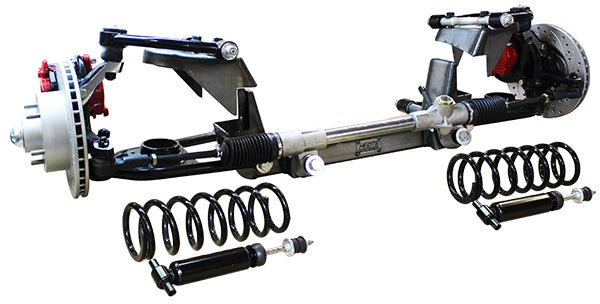
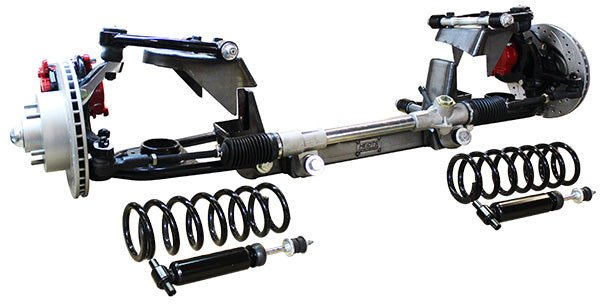
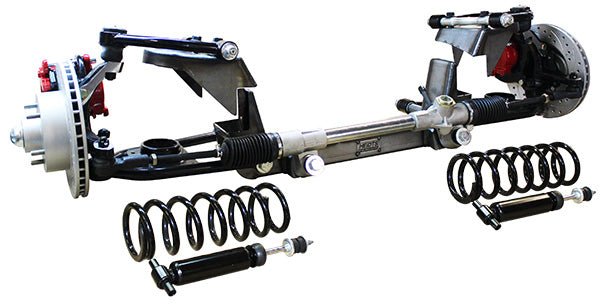
A complete Mustang II front suspension kit includes the core components that handle steering and suspension duties:
Control Arms and Ball Joints
The upper and lower control arms provide the pivot points that allow the wheels to move vertically while maintaining steering geometry. Every time you hit a bump, turn into a corner, or change lanes, these components are doing the work. Quality control arms and ball joints help eliminate unwanted play while keeping steering response consistent and predictable.
Coil Springs
Mustang II suspensions use coil springs rather than the torsion bars or leaf springs found on many classics. Coil springs allow simpler, lighter suspension geometry while providing the spring rate control builders need. Different spring rates suit different vehicle weights and intended uses.
Shock Absorbers
The shocks manage how the coil springs move, controlling both compression and rebound characteristics. Quality shocks provide consistent damping across temperature ranges and suspension travel, creating stable handling regardless of road conditions or driving intensity.
Steering Components
Mustang II systems include a steering box or rack-and-pinion arrangement with a column that connects to your vehicle's steering wheel. Steering is where most builders notice the difference first. Instead of turning the wheel and waiting for the vehicle to respond, Mustang II steering geometry creates a more direct connection between driver and road. The result is improved feedback, better control, and a vehicle that feels far more modern behind the wheel. The power steering option reduces effort compared to manual steering without the lag found in older power systems.
Disc Brakes
Most Mustang II suspensions integrate with disc brake systems, providing stopping power that drum brakes can't match. The brake components mount to the steering knuckles, creating complete braking systems without requiring additional fabrication.
Mustang II Suspension Kits and Complete Systems
Mustang II suspension kits provide matched front suspension systems designed around specific vehicle applications. Different vehicles require different specifications – a Chevy truck needs different geometry than a Ford Fairlane because they have different weight distributions and mounting point locations.
Quality kits include all necessary brackets, hardware, and components for complete installation. The integration of steering, suspension, and brake components in unified packages ensures everything works together smoothly without compatibility issues that come from sourcing individual parts separately.
Complete Mustang II suspension systems address every aspect of front suspension function with matched components engineered to work as cohesive systems. This integration approach creates better results than mixing components from different manufacturers.
Integration with Other Chassis Upgrades
Mustang II suspension parts work together as part of comprehensive chassis modifications:
Crossmembers and Frame Updates
Chassis crossmembers tie frame rails together, preventing flex that compromises suspension geometry. Upgraded crossmembers improve rigidity while sometimes providing mounting points for Mustang II suspension brackets.
Engine Mount Positioning
Engine mounts affect weight distribution and suspension geometry. Proper engine positioning maintains the weight balance that suspension tuning assumes, creating better overall vehicle dynamics.
C-Notch Modifications
C-notch kits create clearance for rear suspension travel on lowered vehicles. While Mustang II suspension addresses the front, proper rear suspension travel preservation ensures your entire suspension system functions correctly.
Building with Mustang II Suspension
Installing Mustang II front suspension requires attention to several critical details. Front-end geometry must align properly. Kingpin inclination, caster, and camber angles all affect handling and tire wear. Improper alignment creates poor handling, accelerated tire wear, or both.
Steering column alignment matters significantly. The column angle affects both steering feel and potential binding when turning. Proper installation ensures smooth operation without binding or excessive stiffness that suggests geometry problems.
Brake line routing requires planning to avoid contact with moving suspension components and to maintain adequate clearance for suspension travel. Lines that route too close to shocks or control arms can become damaged during suspension movement, creating brake failure hazards.
Heidts and Other Quality Manufacturers
Several manufacturers produce quality Mustang II suspension systems. Heidts is well known for complete Mustang II kits that account for application-specific requirements. Their engineering addresses the unique challenges different vehicle platforms present.
Quality varies significantly between manufacturers. Better kits use heavier-gauge control arms, improved ball joints, and better overall construction than budget alternatives. Investing in quality components pays dividends through smoother operation, better handling, and longer service life.
Handling Improvement Reality
This is where the transformation happens.
The first time you drive a properly installed Mustang II suspension system, you'll understand why it's one of the most popular upgrades in the classic car world.
Vehicles that once leaned through every corner suddenly feel composed.
Steering becomes more precise.
Body roll decreases.
The front end feels planted instead of disconnected.
Many builders describe it as driving a completely different vehicle.
And honestly, they're not wrong.
The improvement proves most obvious during aggressive driving, such as spirited backroad runs where the old suspension felt uncertain. With Mustang II suspension, the same roads feel planted and controllable. The vehicle communicates what it's doing through the steering wheel and seat rather than hiding its behavior behind excessive body lean.
Planning Your Mustang II Swap
Determine your specific vehicle's requirements before ordering components. Different vehicles need different Mustang II configurations. A truck with an engine-forward placement requires different bracket geometry than a car with a traditional engine position. Know your vehicle's specific characteristics before committing to a kit.
Consider your complete suspension goals. Mustang II handles the front end – you'll still need to address the rear suspension and overall balance. Comprehensive suspension upgrades that include both front and rear modifications create better results than partial upgrades.
Budget for installation if you lack fabrication experience. Proper Mustang II suspension installation creates excellent handling. Improper installation creates problems that are expensive and time-consuming to fix. Professional installation or meticulous DIY work following detailed procedures ensures you get the results the upgrade promises.
Level Up Your Classic's Front Suspension
If you're tired of vague steering, excessive body roll, and suspension technology that feels decades behind modern standards, a Mustang II suspension upgrade can completely transform the driving experience.
Better handling.
Improved steering response.
More confidence behind the wheel.
Modern performance without sacrificing classic style.
Whether you're building a weekend cruiser, street machine, restomod, or full Pro Touring project, Mustang II suspension remains one of the most proven ways to modernize how your classic drives.
Because horsepower is fun.
But being able to confidently point your vehicle into a corner and know exactly how it's going to respond?
That's what makes driving enjoyable.
Browse our complete Mustang II suspension collection to find the components your specific vehicle needs. Get your classic handling the way modern vehicles should – responsive, confident, and genuinely fun to drive.