
4 Wheel Disc Brake Conversion Kit
Upgrade your classic with four-wheel disc brake conversion kits that bring compatible front and rear brake components together. Explore application-specific systems with options for stock or drop spindles, power brakes, different bolt patterns, and popular classic car and truck configurations.


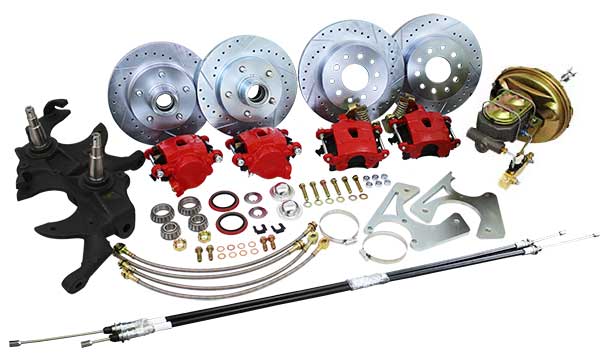


Four-Wheel Disc Brake Conversion Options
A four-wheel disc conversion ties together two ends of the vehicle with potentially very different requirements. The front setup often depends on spindle design and ride height, while the rear depends heavily on the axle housing, flange, offset, bearings, and shock location.
That is why the systems here vary considerably from one application to another. Some retain stock-height spindles, others use 2-inch drop spindles, and rear brake hardware changes based on the axle used rather than the vehicle badge.
Complete packages can also include the hydraulic side of the conversion, including the booster, master cylinder, proportioning valve, and related hardware. For modified classics in particular, this makes the existing front suspension and rear axle configuration just as important as the vehicle year itself.
FAQ
How do I choose the right four-wheel disc brake conversion kit?
Start with your vehicle year, make, and model, but do not rely on those details alone. Confirm the front spindle type, rear axle housing and flange, axle offset, wheel bolt pattern, wheel dimensions, desired ride height, and whether you want manual or power brakes. If the vehicle has been modified, choose the kit according to the components currently installed rather than the original factory specifications.
What is included in a four-wheel disc brake conversion kit?
Contents vary between applications and configurations. A kit may include front and rear rotors, calipers, mounting brackets, brake pads, bearings, seals, hubs, spindles, and installation hardware. Power brake packages may also include components such as a booster, master cylinder, proportioning valve, brackets, and lines. Always check the individual product page to see exactly what is included with the kit you are considering.
Should I choose a stock-spindle or drop-spindle kit?
Choose based on your desired ride height and existing suspension setup. Stock-spindle kits are designed around a factory-style ride height and compatible spindle configuration. Drop-spindle systems can lower the vehicle, with several products in this collection using 2-inch drop spindles. Before choosing a drop-spindle kit, check suspension compatibility, steering geometry, and wheel clearance for your specific application.
How do I know which rear disc brake setup fits my axle?
Identify the rear end currently installed and check the axle housing, flange pattern, axle offset, bearing arrangement, bolt pattern, and shock location. These measurements can vary even between similar-looking rear ends. This is especially important on restored or modified vehicles because the current rear axle may not be the one originally installed at the factory.
What wheel size do I need for a four-wheel disc brake conversion?
Required wheel size depends on the rotor diameter, caliper dimensions, wheel offset, spoke design, and inner-barrel clearance of the specific kit. Wheel diameter by itself does not guarantee fitment. Check the requirements of the individual conversion kit and use a wheel-clearance template when one is provided before purchasing wheels or brake components.
Do I need a different master cylinder for four-wheel disc brakes?
A four-wheel disc setup generally needs a master cylinder designed to work with a disc/disc brake configuration. Master cylinder bore affects hydraulic pressure, fluid volume, pedal travel, and pedal firmness, so it needs to be matched to the calipers, booster, and pedal ratio. Some complete power brake conversion packages include the master cylinder, while others may require components to be selected separately.
Do I need a proportioning valve with a four-wheel disc brake conversion?
A proportioning valve is commonly used to manage brake pressure between the front and rear of the vehicle. Proper brake balance is important because the front and rear brakes need to operate as one system. Some kits include a proportioning valve, bracket, and related lines, while others require these components separately. Check the contents and requirements of the specific kit before ordering.
Do four-wheel disc brake conversion kits include a parking brake?
It depends on the rear brake system included with the kit. Some rear disc configurations provide a mechanical parking brake, while others may require separate cables, calipers, or related hardware. If retaining the parking brake is important to your build, check the individual product specifications and confirm compatibility with your existing parking brake pedal or handle.
How do I choose the right power brake booster for the conversion?
Consider available firewall and engine clearance, booster diameter, diaphragm design, pedal connection, master cylinder compatibility, and engine vacuum. Some products in this collection use different booster sizes and configurations, so two kits for the same vehicle may not provide the same setup. Modified engines can also produce less vacuum than stock engines, which should be considered before choosing a vacuum-assisted system.
Can I install a four-wheel disc brake conversion kit myself?
Installation may be possible for someone experienced with brake and suspension work and equipped with the correct tools. Depending on the kit, installation can involve spindles, wheel bearings, rear axle components, hydraulic lines, pedal linkage, brake bleeding, and clearance checks. Because brakes are a safety-critical system, POL's existing guidance recommends having the completed installation inspected by a qualified technician.