
1937-72 Ford Car Brakes
Find brake parts and systems for 1937-72 Ford passenger cars, from individual hydraulic components to complete disc and power brake conversions. Shop front and rear disc brake kits, power brake boosters, master cylinders, proportioning valves, hoses, fittings, and supporting parts for classic Ford builds.



Brake Systems Across Classic Ford Generations
A 1940s Ford, a mid-century Thunderbird, and a 1960s Falcon may all sit under the same Ford badge, but their brake systems were built around very different chassis and suspension layouts. That makes this collection less about one type of upgrade and more about bridging several generations of Ford braking technology.
Early applications lean heavily toward complete front disc conversions, including systems for 1937-48 Ford cars, 1954-56 Ford and Mercury models, and 1955-57 Thunderbird. Later Falcon and Fairlane applications add their own spindle and suspension requirements.
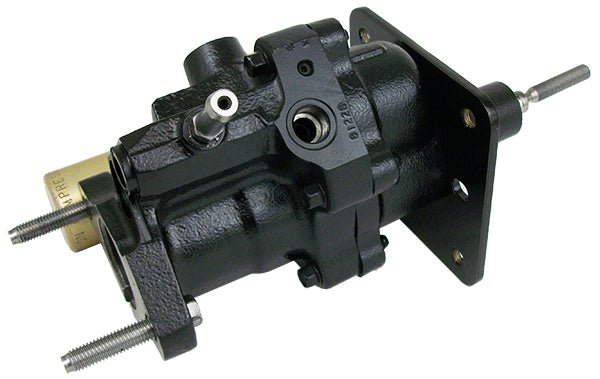
Further into the system, the collection shifts from wheel-end hardware to brake control. Power boosters, master cylinders, proportioning components, Hydropower parts, and vacuum-support equipment allow the amount of assistance and hydraulic hardware to change independently from the disc conversion itself.
Rear brake products introduce one more dividing line: the axle. Ford 9-inch conversions and Wilwood systems are selected around housing and bearing configuration, meaning the rear end currently under the car can matter more than the model name on the body.
FAQ
How do I choose the right brake parts for my 1937-72 Ford car?
Start with the exact year and model, then identify the braking and suspension components currently installed. Check whether the car has drum or disc brakes, manual or power assist, the front spindle configuration, rear-end type, wheel bolt pattern, and wheel clearance. Older Fords are frequently modified, so current components can be more important for fitment than the original factory specifications.
Which Ford cars are covered by this brake parts collection?
The collection covers brake products intended for a range of Ford passenger cars from 1937 through 1972. Vehicle-specific products include applications for early full-size Ford cars, Falcon, Fairlane, Thunderbird, and other classic Ford platforms. Some products also cover Ford/Mercury applications or are universal components used across several brake systems.
Can I convert an older Ford from drum brakes to front disc brakes?
Yes, when a compatible conversion is available for the vehicle and front-end configuration. The collection includes front disc brake conversions for applications such as 1937-48 Ford cars, 1954-56 Ford/Mercury, 1955-57 Thunderbird, 1964-66 Falcon, and 1964-66 Fairlane. Always confirm spindle, wheel, bolt-pattern, and suspension requirements for the individual kit.
Are power brake booster kits available for classic Ford cars?
Yes. The collection includes vehicle-specific power brake systems such as a 1949-51 Ford full-size car booster kit and a 1952-72 Ford/Mercury power brake booster kit. When choosing a booster, check firewall mounting, pedal connection, master cylinder compatibility, available engine clearance, brake configuration, and available engine vacuum.
How do I choose a master cylinder for my classic Ford?
First determine whether the car has drum/drum, disc/drum, or disc/disc brakes and whether the system is manual or power assisted. Then check bore size, mounting configuration, pushrod requirements, outlet locations, and proportioning needs. The collection includes Ford-specific master cylinder packages as well as performance and conversion-oriented master cylinders.
How do I know which rear disc brake conversion fits my Ford?
Identify the rear end currently installed rather than relying only on the car's year and model. Ford 9-inch rear ends can have different housing ends, bearing sizes, axle offsets, and flange configurations. This collection includes Ford 9-inch rear conversions as well as a Wilwood system for the Big Torino flange, so those rear-end specifications need to be confirmed before ordering.
What should I check when combining new and existing brake parts?
Look at the braking system as a whole. Front and rear brake type, master cylinder bore, proportioning, pedal ratio, power assist, brake hoses, wheel clearance, and rear-end configuration all need to work together. If only part of the system is being changed, confirm that the new components are compatible with the parts remaining on the vehicle rather than assuming that individually compatible parts will automatically create a matched brake system.