
Brake Booster
Reduce pedal effort and upgrade your braking setup with brake boosters for classic cars, trucks, restorations, and custom builds. Choose from multiple sizes, single- and dual-diaphragm designs, vacuum boosters, and hydraulic brake-assist options.





Power Brake Boosters for Different Classic Builds
Booster size often depends on the space around it. A classic with generous firewall clearance may accommodate an 11-inch unit, while a crowded engine bay or large valve covers can make a compact 7- or 8-inch booster the more practical choice.
Diameter is only part of the equation. Single- and dual-diaphragm designs change how much assist a given package size can produce, which is why two boosters with similar dimensions may suit very different brake systems.
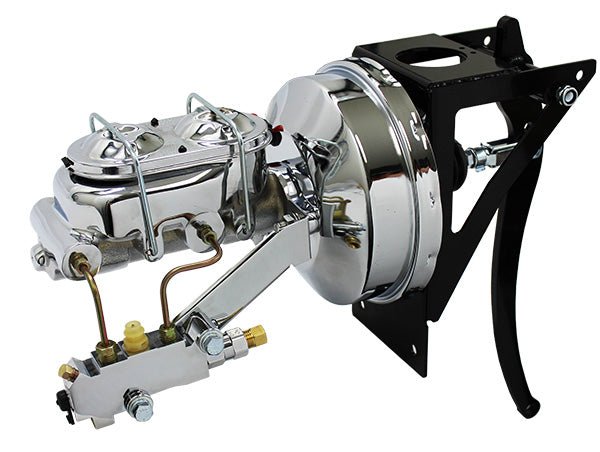
This collection moves between universal units and application-specific GM and Corvette boosters, including chrome, zinc-plated, and traditional Delco-style configurations. That gives both modified builds and restoration-focused cars options without forcing the same appearance or mounting approach.
All of these vacuum boosters share one requirement: sufficient engine vacuum. When a modified engine cannot provide it consistently, the limitation comes from the vacuum source rather than the booster itself, which is where hydraulic-assist systems become a different solution altogether.
FAQ
How do I choose the right brake booster for my vehicle?
Start with your vehicle year, make, and model, then check how much space is available around the firewall and engine. You should also consider booster diameter, single- or dual-diaphragm design, engine vacuum, mounting configuration, pushrod connection, and master cylinder compatibility. Some boosters in this collection are vehicle-specific, while others are intended for more universal applications, so always confirm the product specifications before ordering.
What size power brake booster do I need?
Booster size depends on available space and the needs of your braking system. This collection includes compact 7-inch and 8-inch boosters as well as larger 9-inch and 11-inch options. Smaller boosters can be useful when firewall, engine, or valve-cover clearance is limited, while a larger booster may be an option when the vehicle provides sufficient room. Diameter should not be the only consideration, since diaphragm design and overall brake system compatibility also matter.
What is the difference between single- and dual-diaphragm brake boosters?
A single-diaphragm booster uses one diaphragm to provide brake assistance, while a dual-diaphragm design uses two. A dual-diaphragm booster can provide greater assist in a relatively compact diameter, making it useful for some vehicles where a larger booster will not fit. The collection includes both single- and dual-diaphragm 7- and 8-inch options, along with larger single-diaphragm boosters.
How much engine vacuum does a power brake booster need?
A traditional vacuum brake booster needs a consistent source of engine vacuum to provide proper assistance. Modified engines, especially those with more aggressive camshafts, may produce less vacuum than a stock engine. If vacuum is limited, the complete braking system should be evaluated before choosing a booster. A vacuum pump or reservoir may help in some applications, while a hydraulic brake-assist system can provide another solution.
When should I consider a hydraulic brake assist booster instead of a vacuum booster?
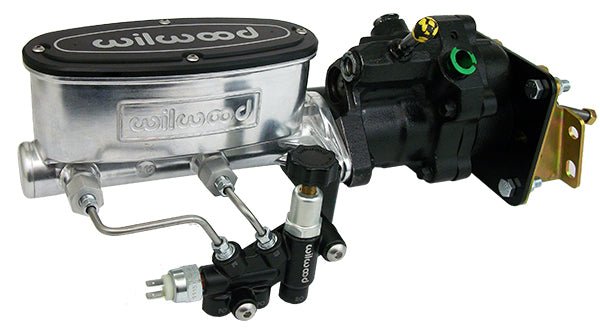
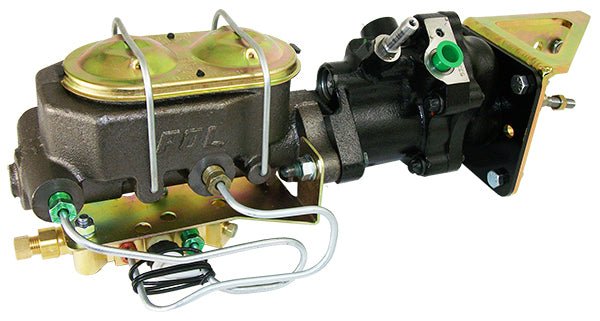
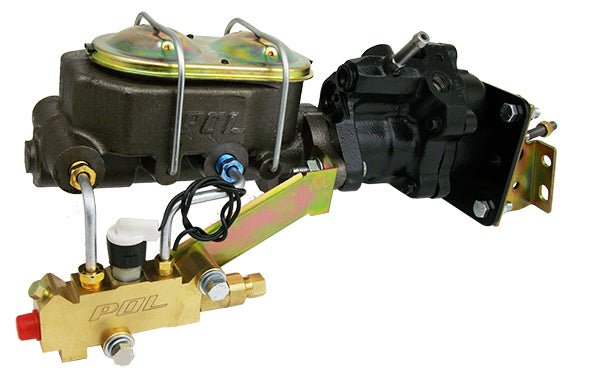
Hydraulic brake assist can be useful when an engine does not produce enough consistent vacuum for a traditional booster or when the build is better suited to hydraulic assistance. Instead of engine vacuum, a hydraulic system uses pressure from the power steering system to provide brake assist. This collection includes a Hydropower hydraulic brake assist option alongside conventional vacuum boosters.
Will a universal brake booster fit my classic car or truck?
A universal booster should not be assumed to fit every vehicle. Check firewall mounting, available clearance, pushrod length and connection, pedal geometry, master cylinder compatibility, and the surrounding engine components. This collection also includes application-specific boosters for vehicles such as 1967-72 Chevy/GMC trucks and 1963-67 Corvettes, which may be a better choice when the application matches your vehicle.
Can I use my existing master cylinder with a new brake booster?
It depends on the booster, master cylinder, and brake configuration. The mounting pattern and pushrod must be compatible, and the master cylinder bore should be appropriate for the rest of the braking system. Disc/disc and disc/drum setups can also have different requirements. Before reusing an existing master cylinder, confirm that it is compatible with the specific booster and the complete brake system rather than selecting the booster by mounting dimensions alone.