
Power Steering Pumps & Components
Build the hydraulic side of your steering system with pumps and supporting components designed for a range of classic and modified applications. Explore Saginaw pumps, engine-specific brackets, pulleys, reservoirs, rubber and stainless hoses, filters, and fittings for steering gearboxes, rack-and-pinion systems, LS applications, and Hydropower setups.


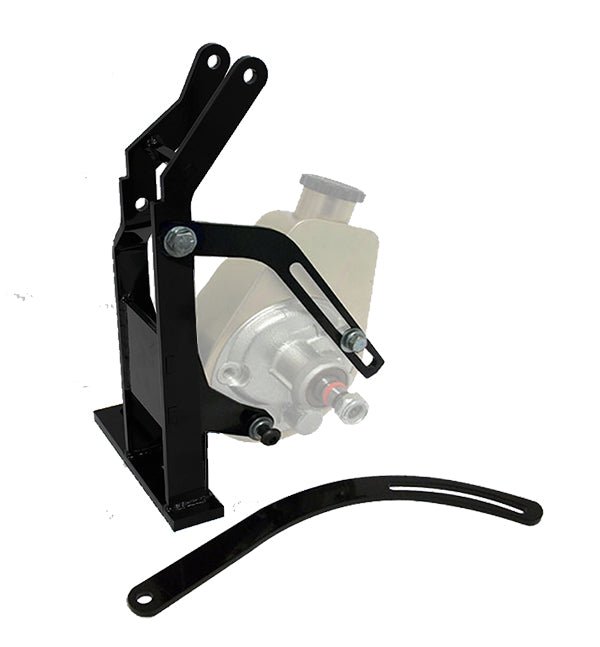


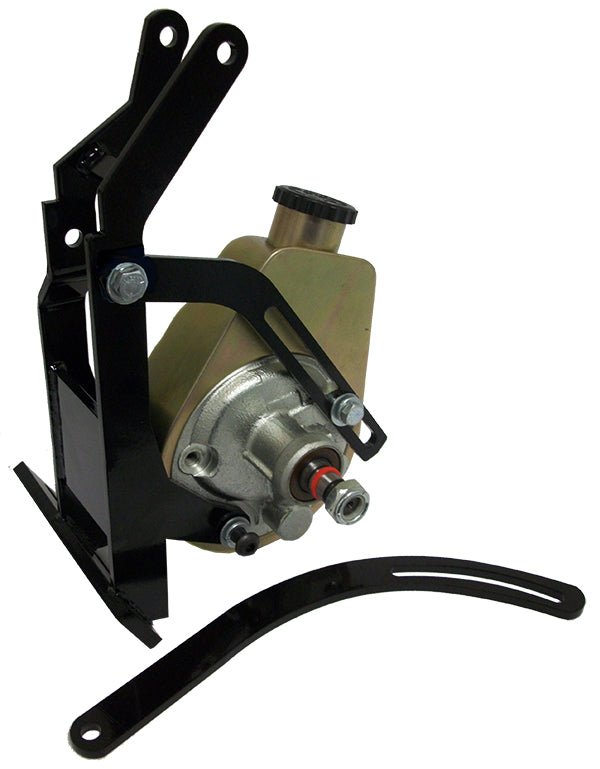
Power Steering Pumps and Hydraulic System Components
Start at the reservoir. The pump draws fluid, pressurizes it, and sends it through the pressure hose to the steering gearbox or rack. After assisting the steering, it returns through the system's low-pressure side and the cycle begins again.
Every product in this collection supports a different point along that path. Saginaw, chrome, and remote-reservoir pumps generate the pressure, while engine-specific brackets for Chevy, GM inline-six, and Ford small-block applications position the pump correctly in the accessory drive.
Single- and double-groove pulleys handle the mechanical connection to the engine. Rubber and braided stainless hoses then carry the fluid forward, with separate plumbing available for GM gearboxes, rack-and-pinion systems, LS pumps, and Hydropower applications.
Filters and coolers address what happens to the fluid along the way, while AN fittings and remote reservoirs let you adapt routing when the engine bay demands a different layout. Rather than representing a single steering component, the collection follows the hydraulic circuit from beginning to end.
FAQ
How do I choose the right power steering pump?
Start by identifying the steering gearbox or rack-and-pinion system, engine, pump mounting arrangement, and hose connections. Then consider whether the installation needs an attached or remote reservoir and which pulley configuration works with the accessory drive. POL carries standard and chrome Saginaw pumps, remote-reservoir pumps, and engine-specific pump kits, so the correct choice depends on the complete steering system rather than the pump alone.
What is the difference between a standard and remote-reservoir power steering pump?
A standard configuration keeps the fluid reservoir at the pump, while a remote-reservoir system uses a separate fluid tank connected to the pump. A remote reservoir can be useful when engine-bay packaging or component placement makes a pump-mounted reservoir less suitable. POL carries both configurations as well as a separate aluminum remote reservoir with a level indicator.
How do I choose the correct power steering pump bracket?
Match the bracket to the engine and accessory arrangement. This collection includes brackets for small-block and big-block Chevy engines, early Chevy 216 and 235 six-cylinder engines, GM 230/250 six-cylinders, and Ford small-block applications. Check the mounting points, pump position, pulley alignment, and other accessories before ordering.
Do I need a single-groove or double-groove power steering pulley?
That depends on the engine's belt arrangement and the accessories sharing the drive system. POL carries both single- and double-groove Saginaw-type pulleys. In addition to groove count, check pulley diameter, offset, shaft compatibility, and alignment with the crankshaft and other accessory pulleys.
Should I choose rubber or braided stainless power steering hoses?
Both types are represented in the collection. Rubber provides a more traditional appearance, while braided stainless gives the plumbing a different exterior finish and added outer protection. More importantly, the hose needs the correct fittings, pressure rating, length, and routing for the pump and steering gear or rack being connected. POL carries separate hose configurations for GM gearboxes and rack-and-pinion systems.
Are there power steering components for LS engine applications?
Yes. POL lists a stainless steel power steering hose kit specifically for LS power steering pumps. When connecting an LS pump to another steering system, check the pressure and return connections, steering gear or rack fittings, hose routing, and pump configuration so all of the hydraulic components are compatible.
Can these power steering components also be used with Hydropower brakes?
The collection includes components specifically intended to support Hydropower installations, including rubber and stainless Hydropower hose hookup kits and a return-to-pump line kit. Because the steering and hydraulic brake-assist systems share hydraulic plumbing in this type of setup, the pressure and return lines need to be routed and connected according to the requirements of the complete system.